Deep Learning
Genie-Phenie ::: An LLM for Genome Sequence & CRISPR In-Silico
Exploring CRISPR-inspired gene screening using machine learning and LLMs, treating DNA sequences as a language to model, analyze, and detect anomalies in genetic data through transformer-based approaches.
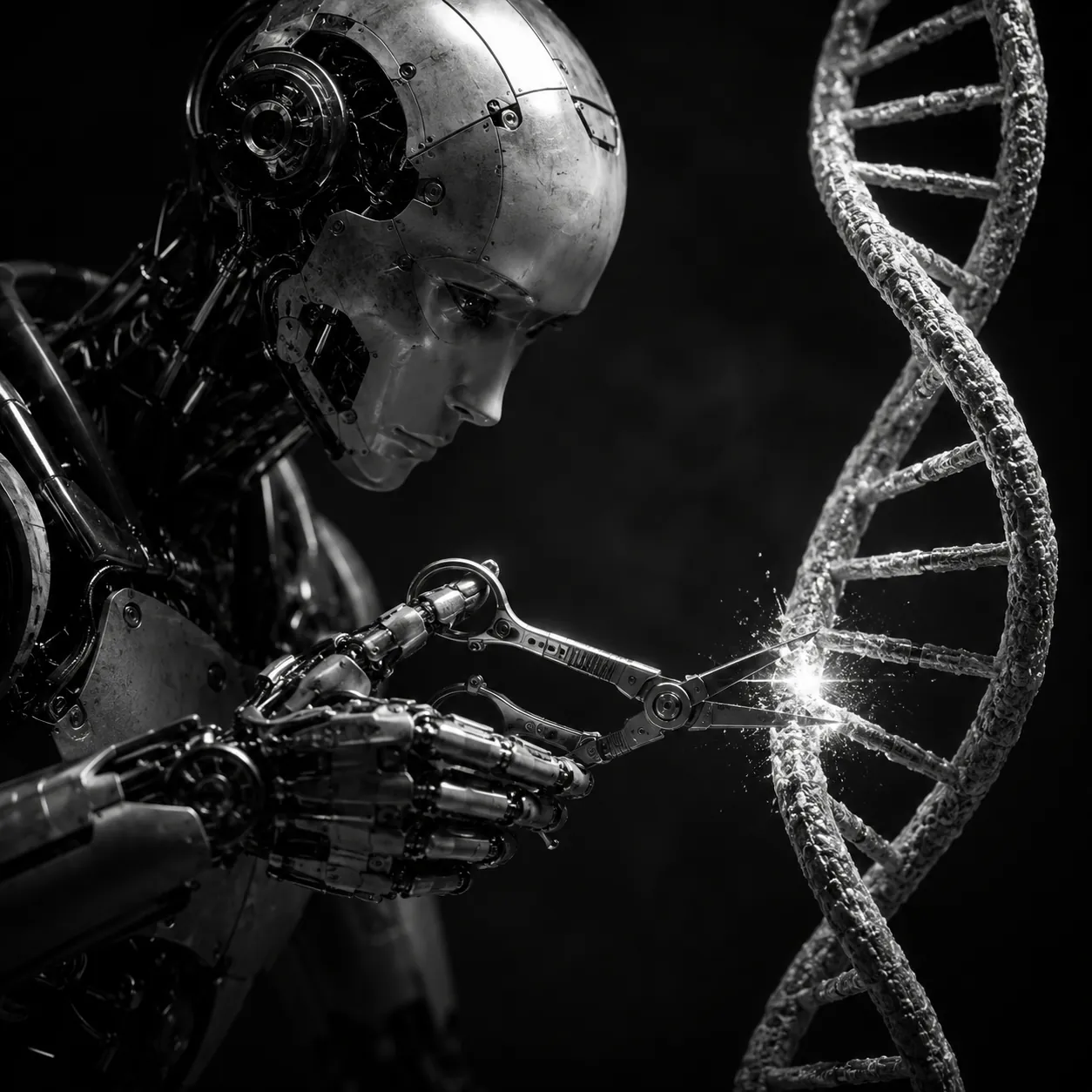
Initial Motivation
We were first drawn into CRISPR through social media buzz, where discussions around gene editing, FDA approvals, and breakthrough discoveries frequently appeared on platforms like Instagram and Y Combinator articles. It felt exciting and almost futuristic, something that could redefine biology itself.
Biological Foundations and Key Insight
As we started diving deeper, things quickly became more complex. We had to understand genes, genomes, chromosomes, bacteriophages, and the underlying biological mechanisms that make CRISPR possible. One of the most fascinating insights was learning how bacteria can recognize a virus that attacked them long ago using only a fragment of its DNA. That idea sparked a parallel thought in us. If biological systems can recognize past patterns from fragments, can we build a similar mechanism for data like images or sequences using machine learning?
Early Learning and Inspiration
During this exploration, one key reference that deeply influenced our understanding was "A Crack in Creation" by Jennifer Doudna and Samuel H. Sternberg. It helped us connect theoretical biology with real-world CRISPR applications and made the entire system much more intuitive.
Early Experiments in ML
This curiosity naturally led us to experiment with CNNs and MLPs, trying to understand how far pattern recognition could be pushed. But we were not just trying to replicate ideas. We wanted to build something meaningful at the intersection of AI and genetics.
Shift Toward LLMs for Genomics
That is when the idea of using Large Language Models began to take shape. We explored training an LLM on a large corpus of DNA genotype data. The model showed promising results in anomaly detection, which opened a new direction: using LLMs for gene screening.
DNA as a Language
In this context, we viewed DNA as a language. Just like LLMs understand grammar in human language, our model, Genie-Phenie, learns the grammar of genetics. It can detect irregularities in DNA sequences and suggest what might be biologically more plausible, making genetic screening more intuitive and assistive.
Scaling Thought and Research Question
Inspired by the scale of genetic information, as discussed in references like Kevin Patrick’s machine learning work (with DNA containing billions of base pairs), we began wondering: with enough computational power and data, could an LLM fully learn the grammar of genetics? And if so, could that become a true gene changer?
Collaboration and Implementation
This exploration was carried out alongside R.V Shakthi Dharan, Sharvesh Shanmugam, and Deva Ganesh Venkatesan, the BioGeeks from SRM IST Chennai. It eventually led us to design a synthetic genotype–phenotype LLM system, where genotype sequences are mapped to observable traits using next-token prediction. This allowed us to simulate parts of the CRISPR workflow in silico.
Outcome and Exposure
The journey even led to a showcase opportunity at Coimbatore Institute of Technology, further deepening our understanding of both CRISPR and its potential intersections with AI. Overall, this exploration was not just about building a model, but about understanding how far the analogy between biological and computational “languages” can be stretched.
Comments