1. Amman
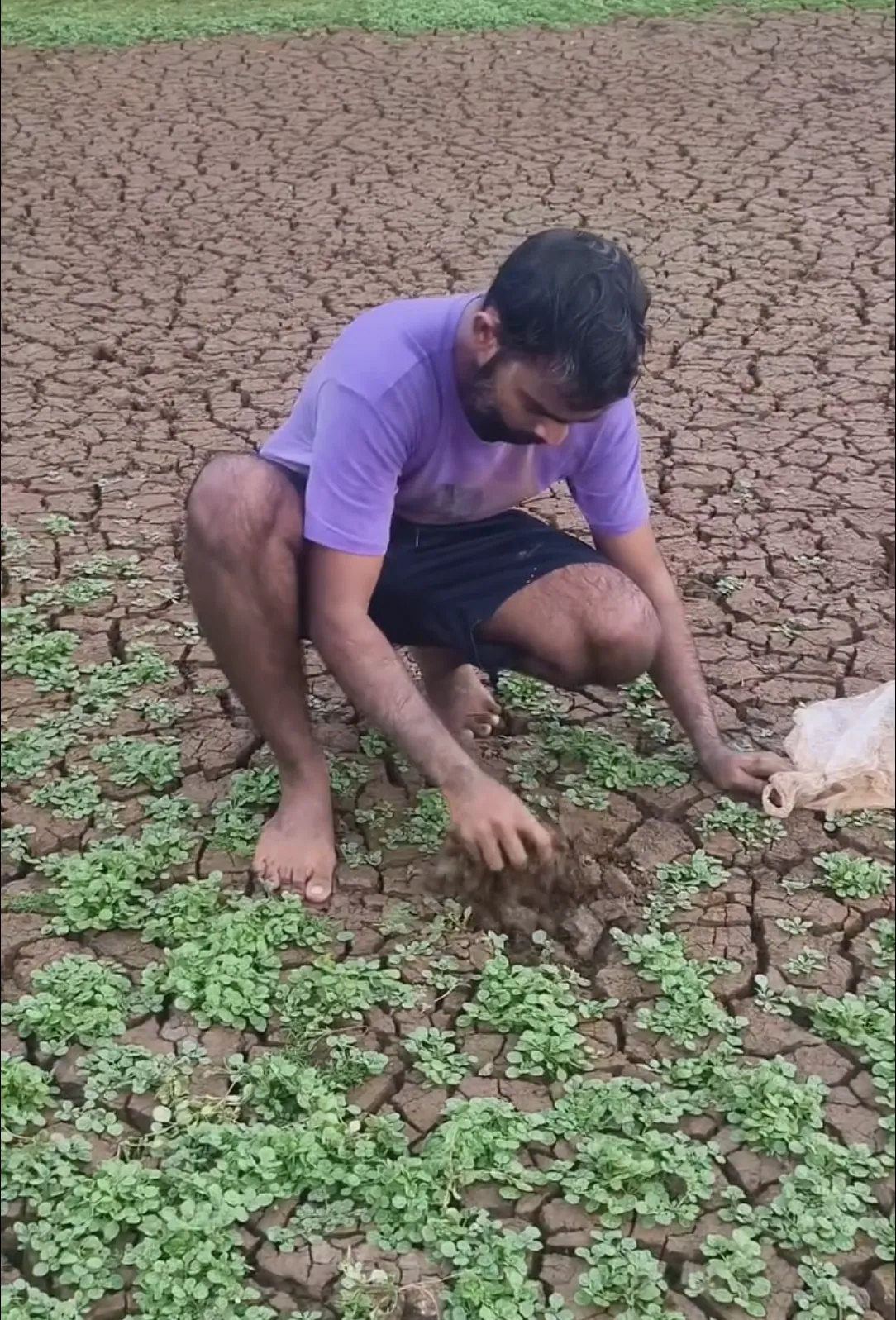
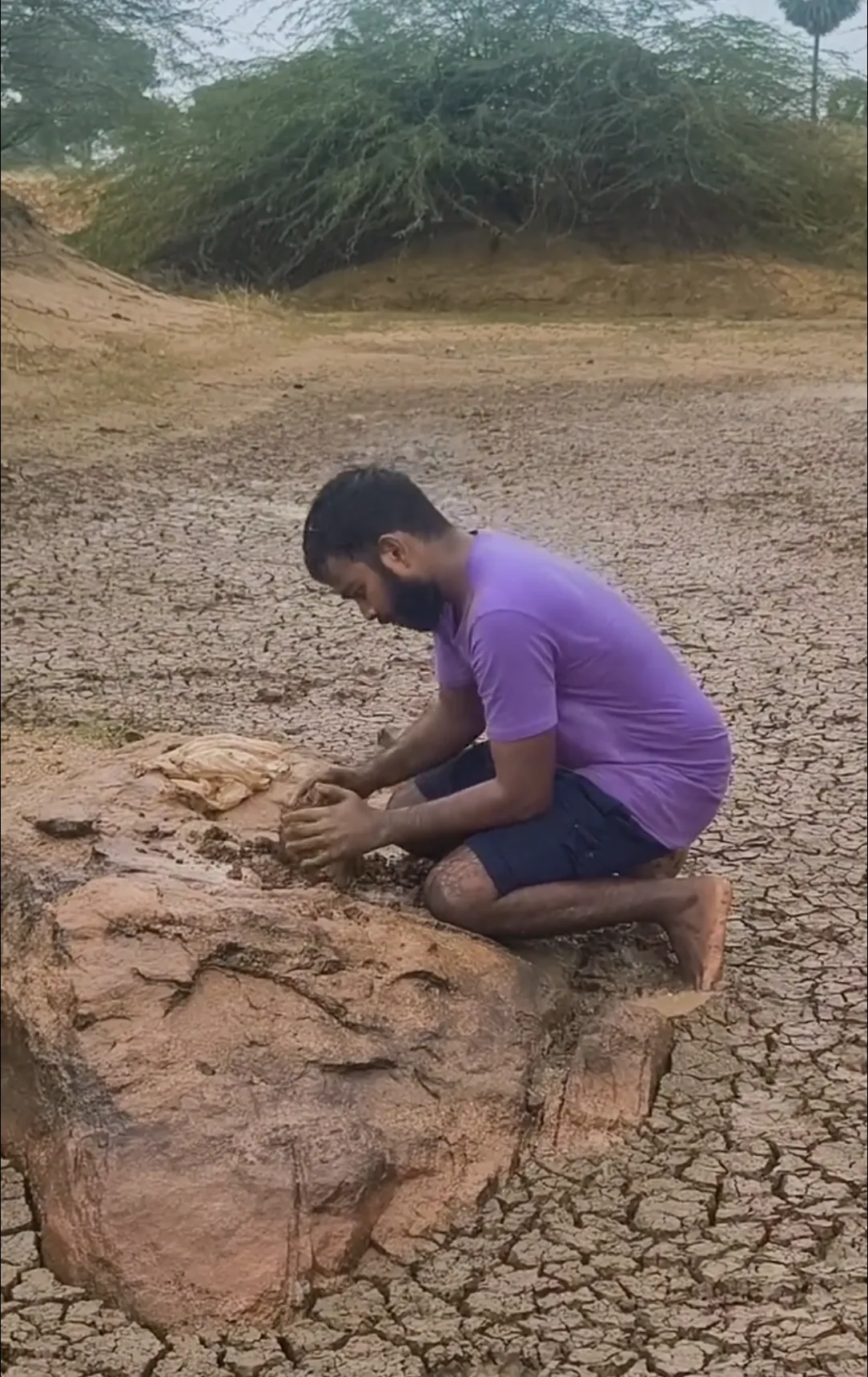
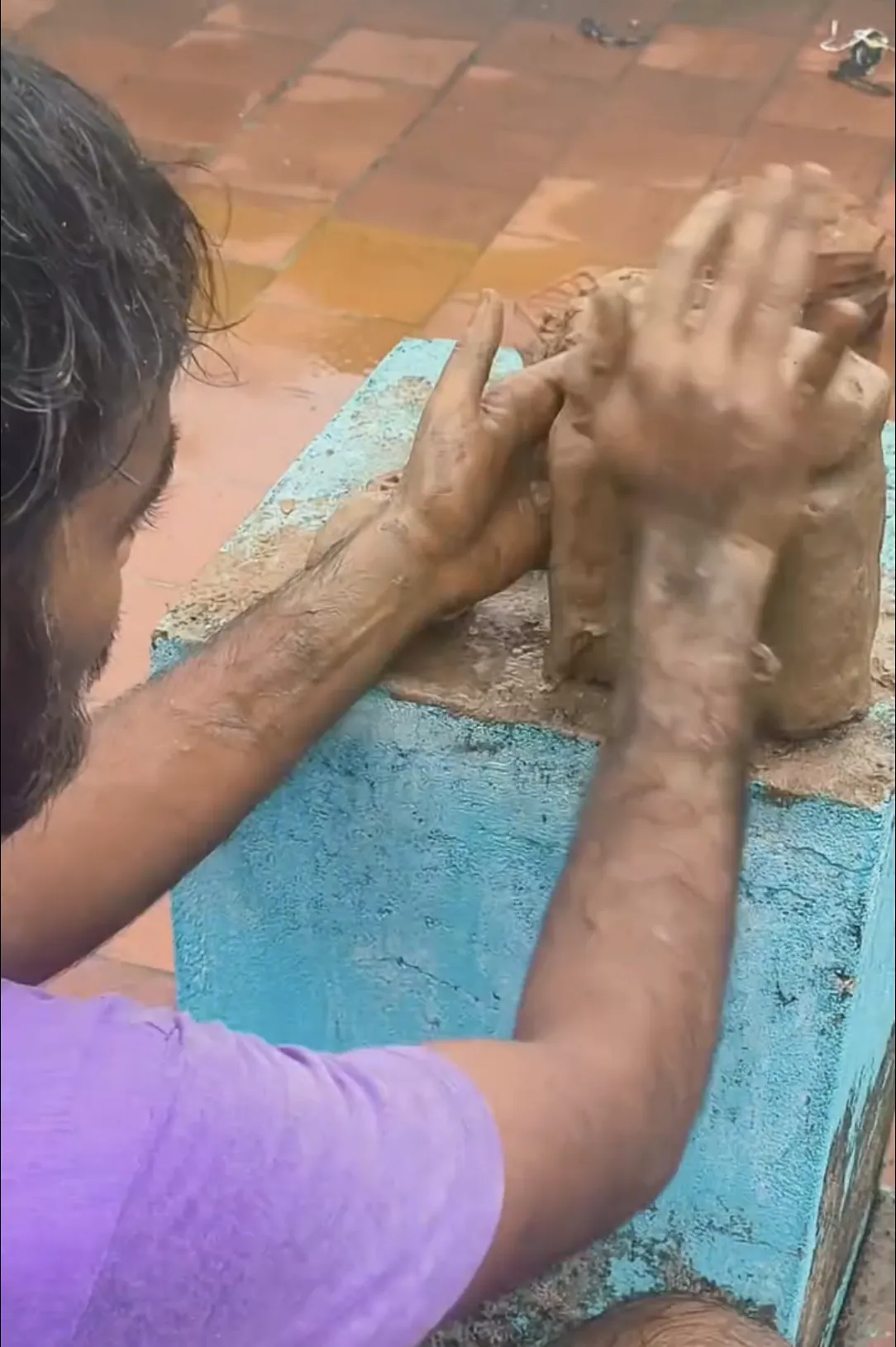
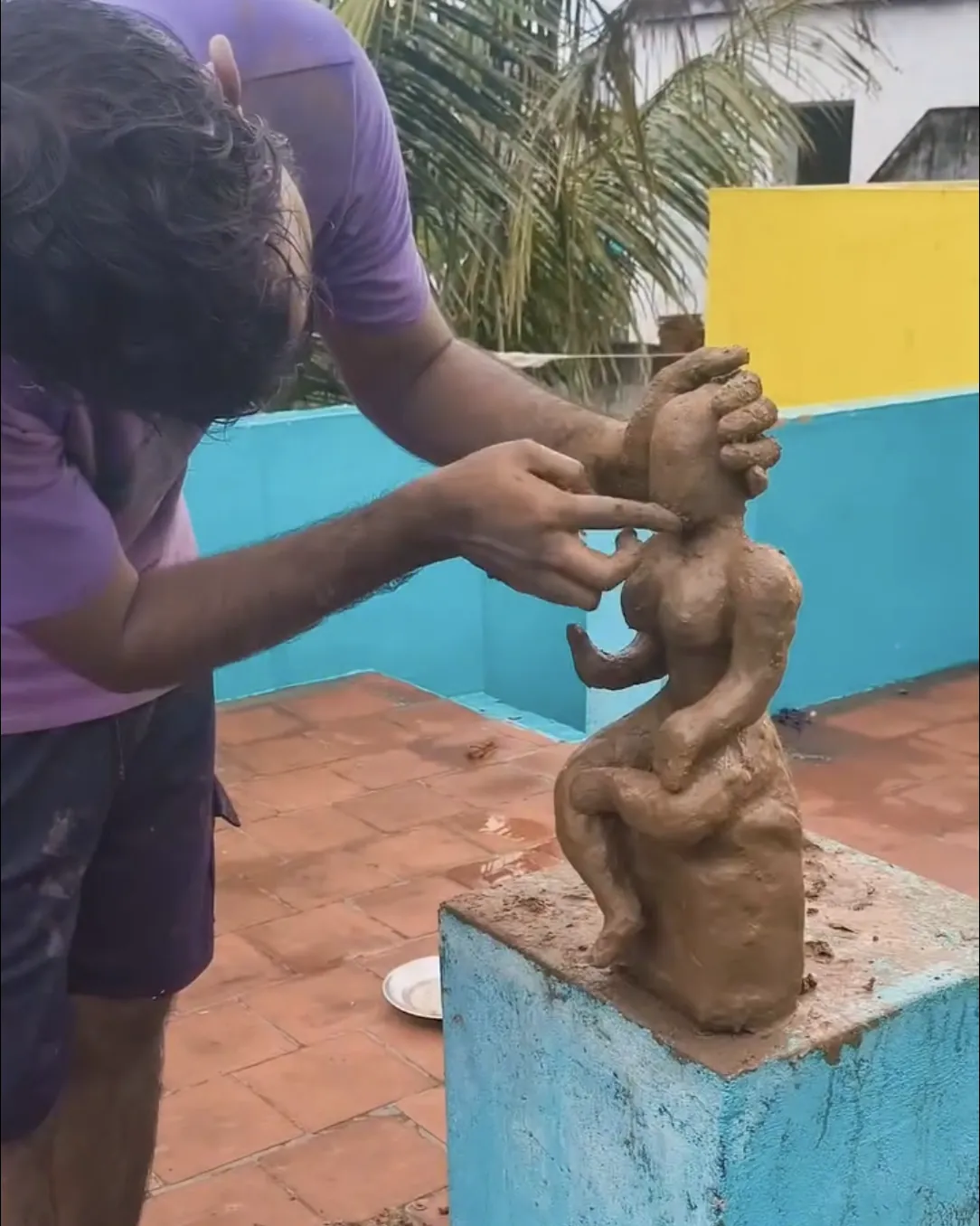
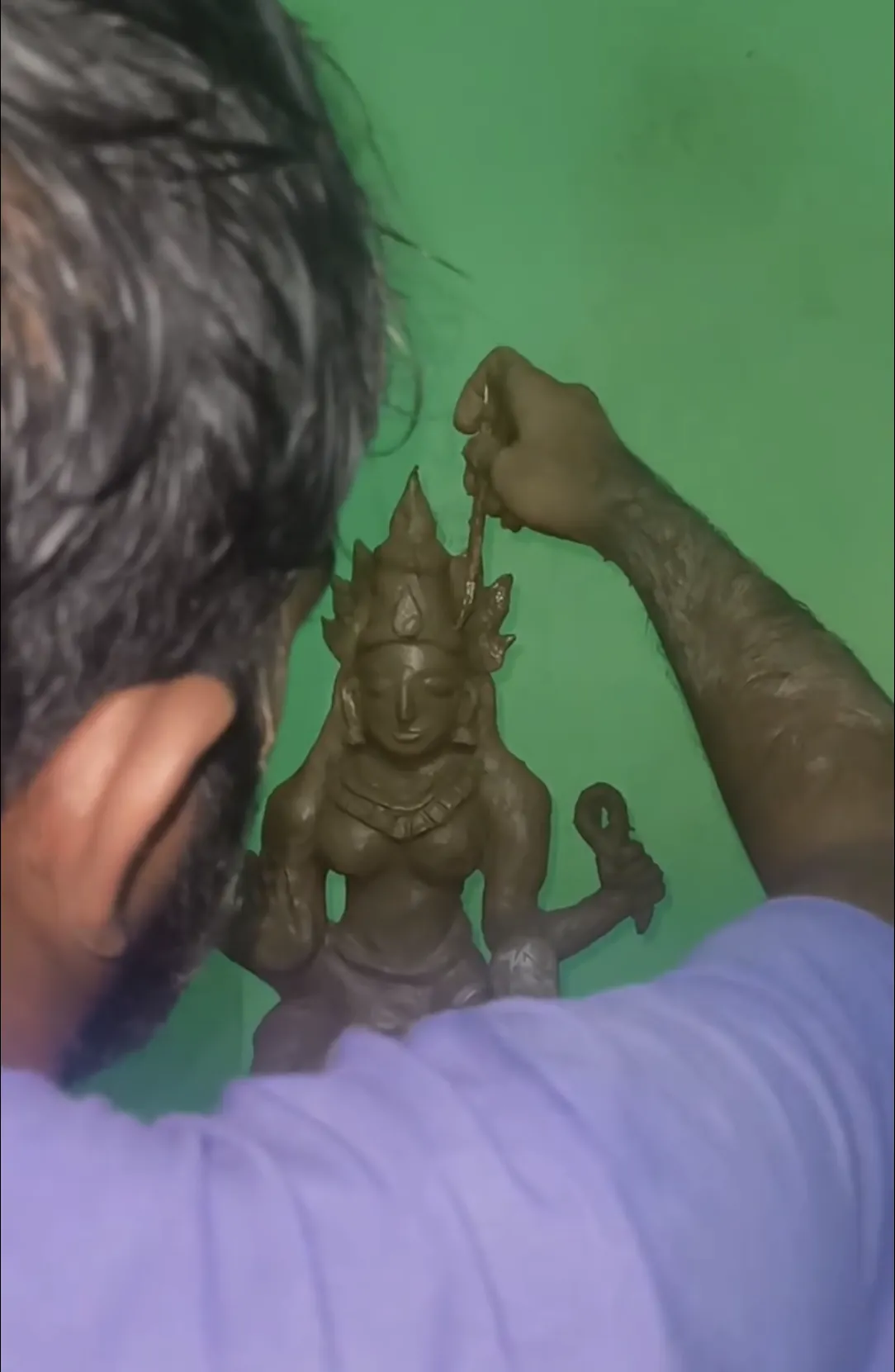
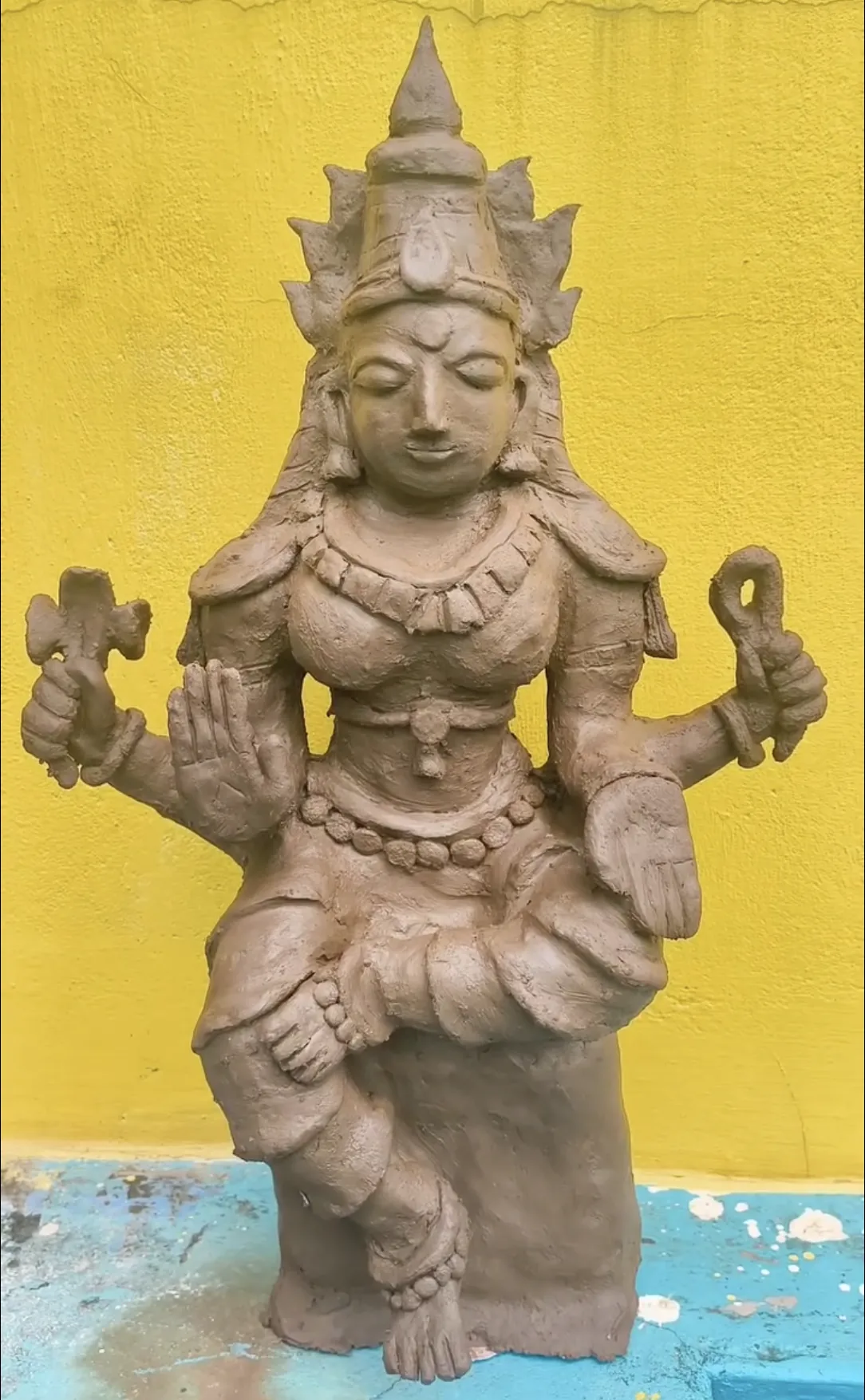
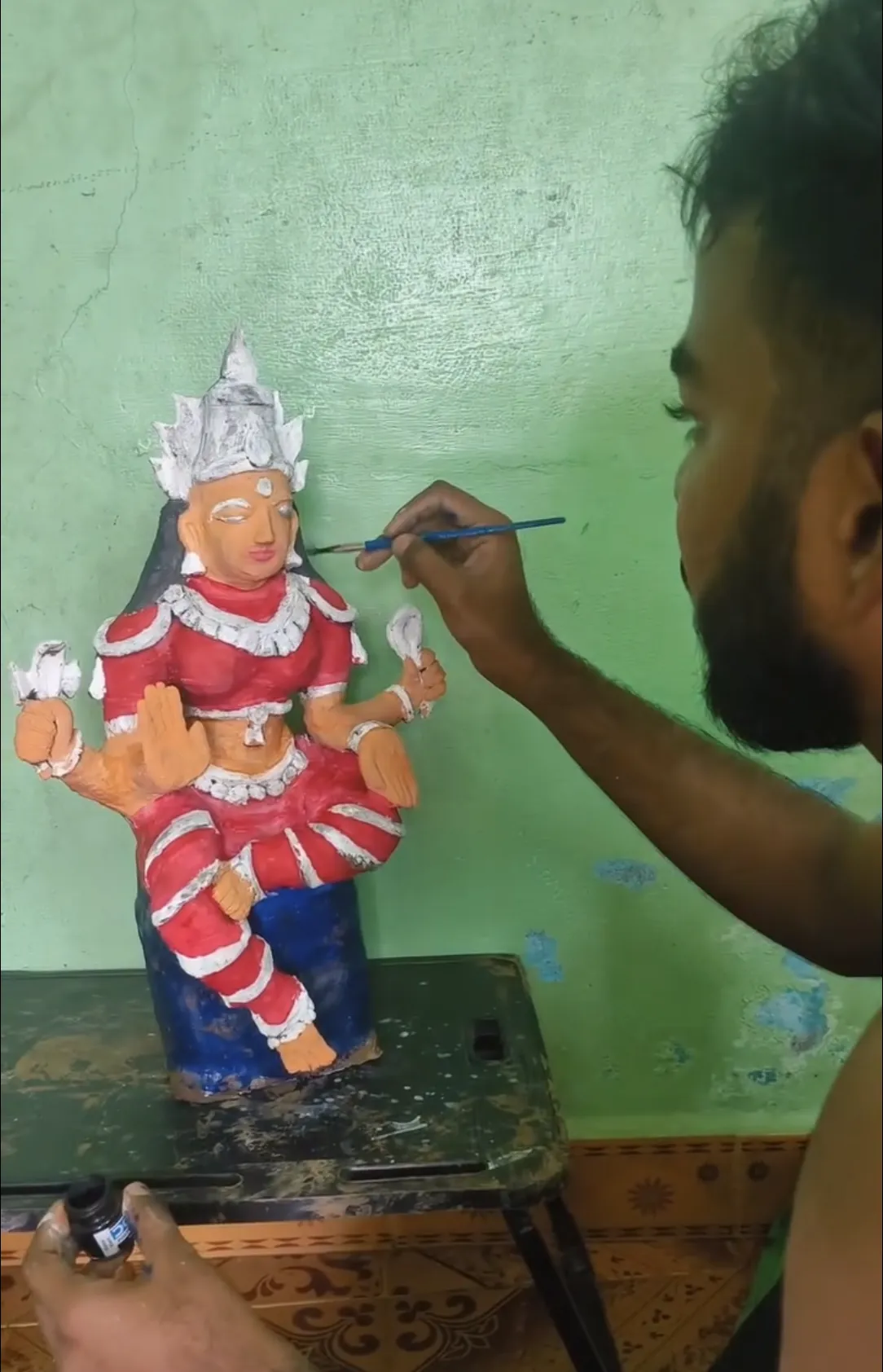
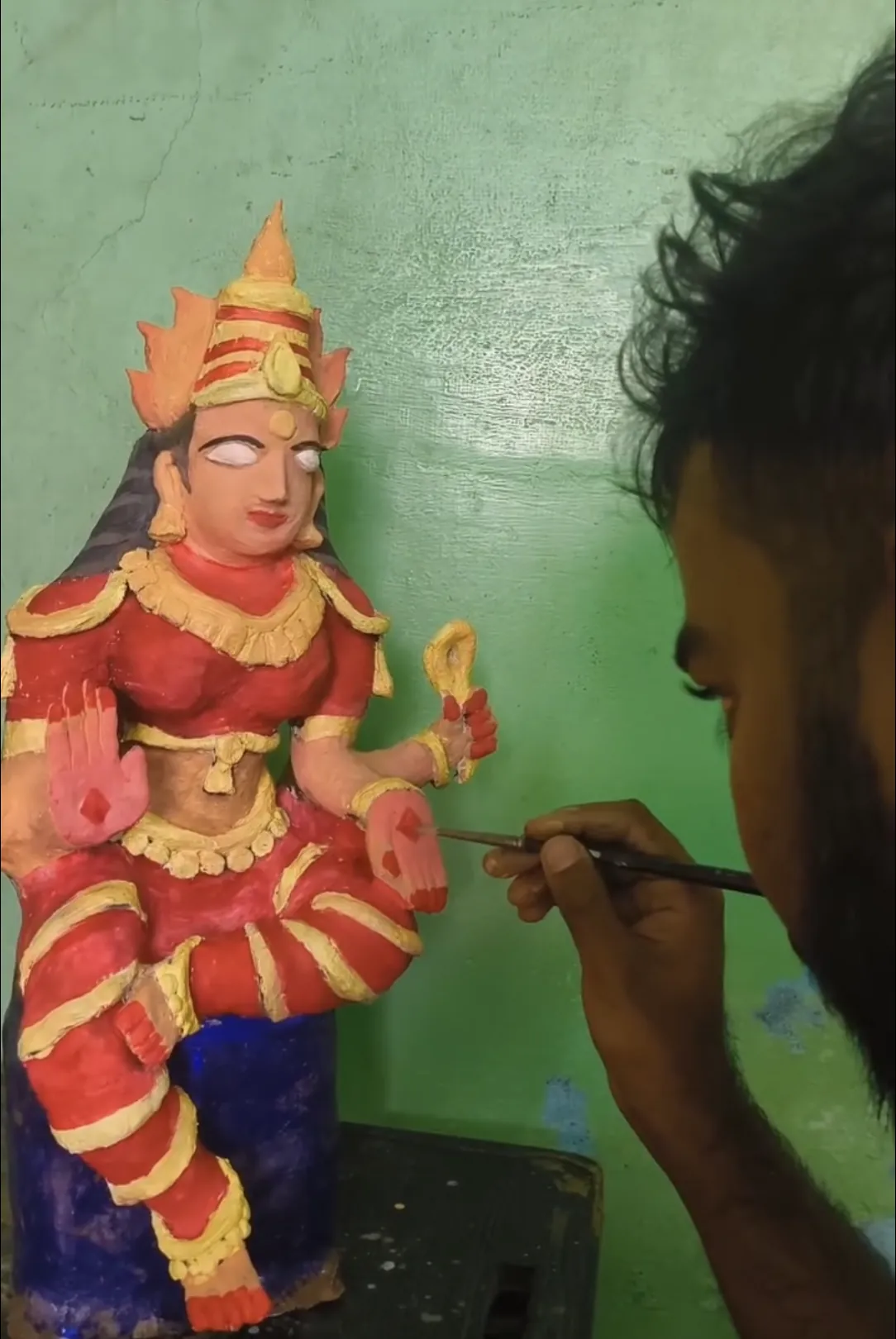
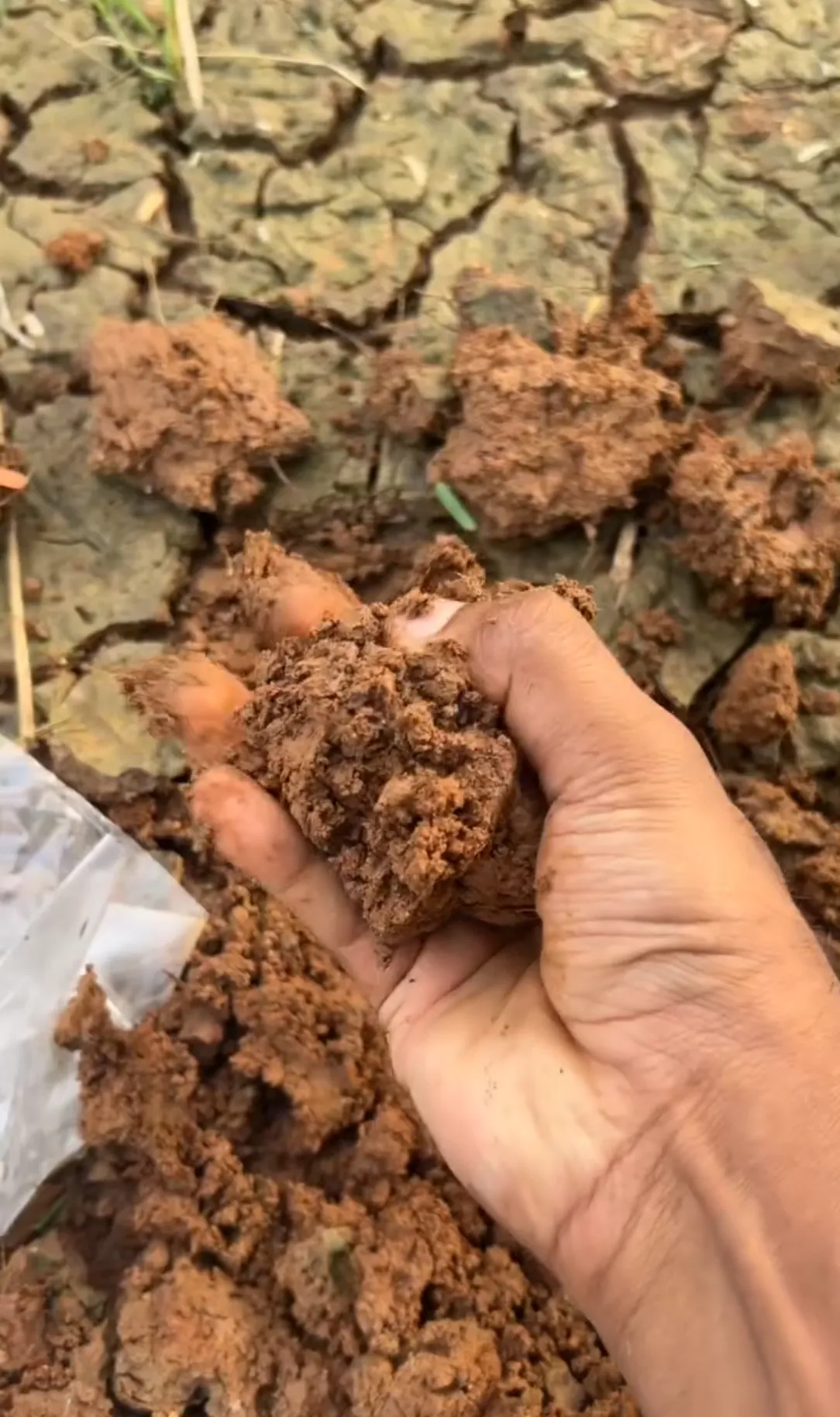
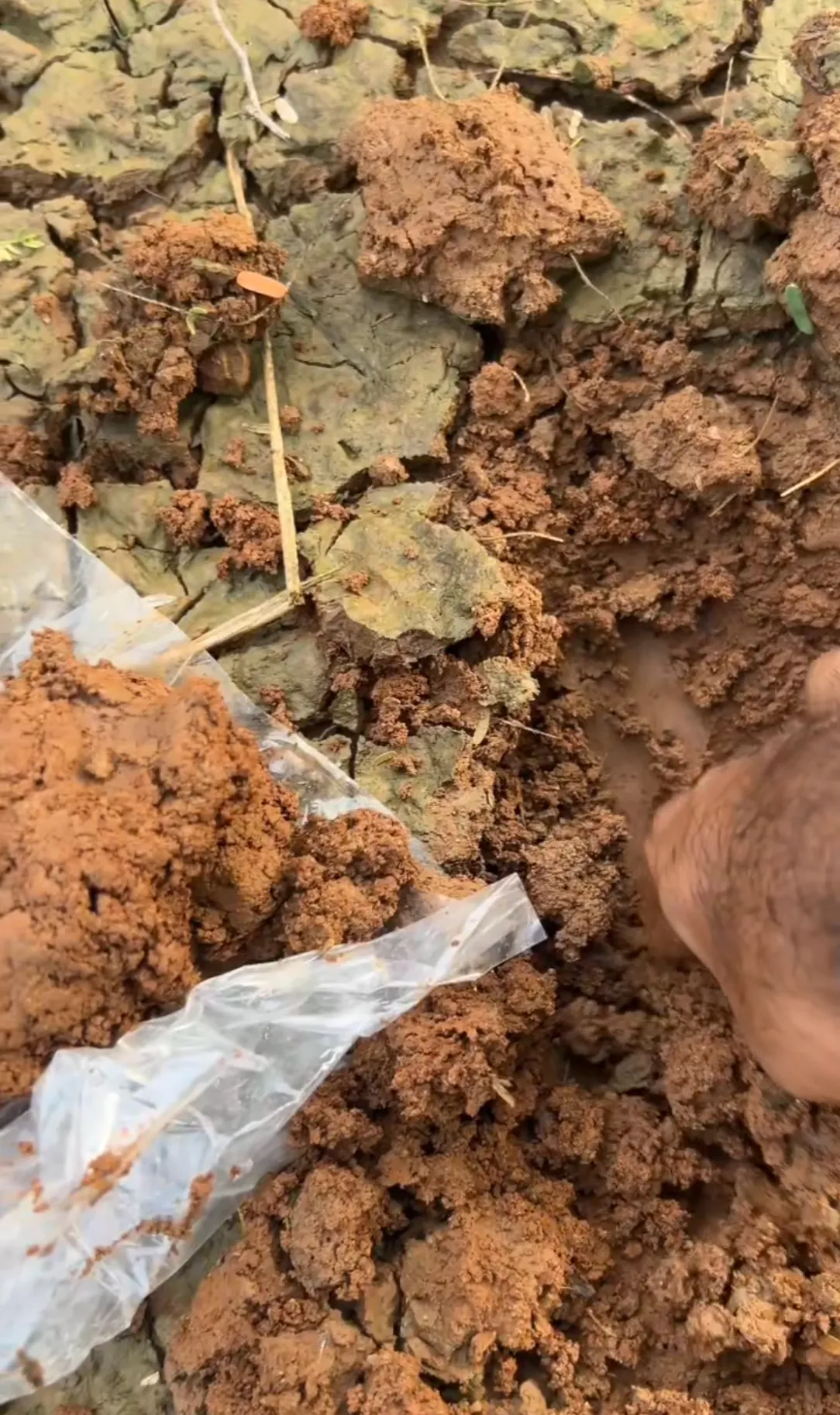
Amman is a rural deity and goddess, an emotion especially for rural Tirunelveli men like me, and my life began hearing her stories in village festivals and from my grandmother. In folk traditions rooted in Hindu concepts, she is seen as a form of the Goddess Shakti. In Tamil folk beliefs, she appears in many ancestral forms: a virgin girl who dies in a family becomes Kanniyamman; one who dies by jumping into fire is Theeppaanchiyamman; a pregnant woman killed is Maasaaniyamman; and a woman deceived and killed by her lover becomes Esakkiyamman, among others. Beyond these forms, she is also identified with Kaali, the fearsome face of nature, and Maari, the rain goddess, and the stories in the South are endless. This statue was made by me using clay collected from Saamiyaar Kulam in my village, where I learned to swim and often saw cobras; the clay there, called Paal Pottal, is a moisture-retaining sand known for its fresh water springs. After I lost my grandmother, I felt a deeper connection to the Mother Goddess, not as belief but as emotional transference, and this work, born out of that grief, is my first major piece in clay.
2. Ayyan/Sastha
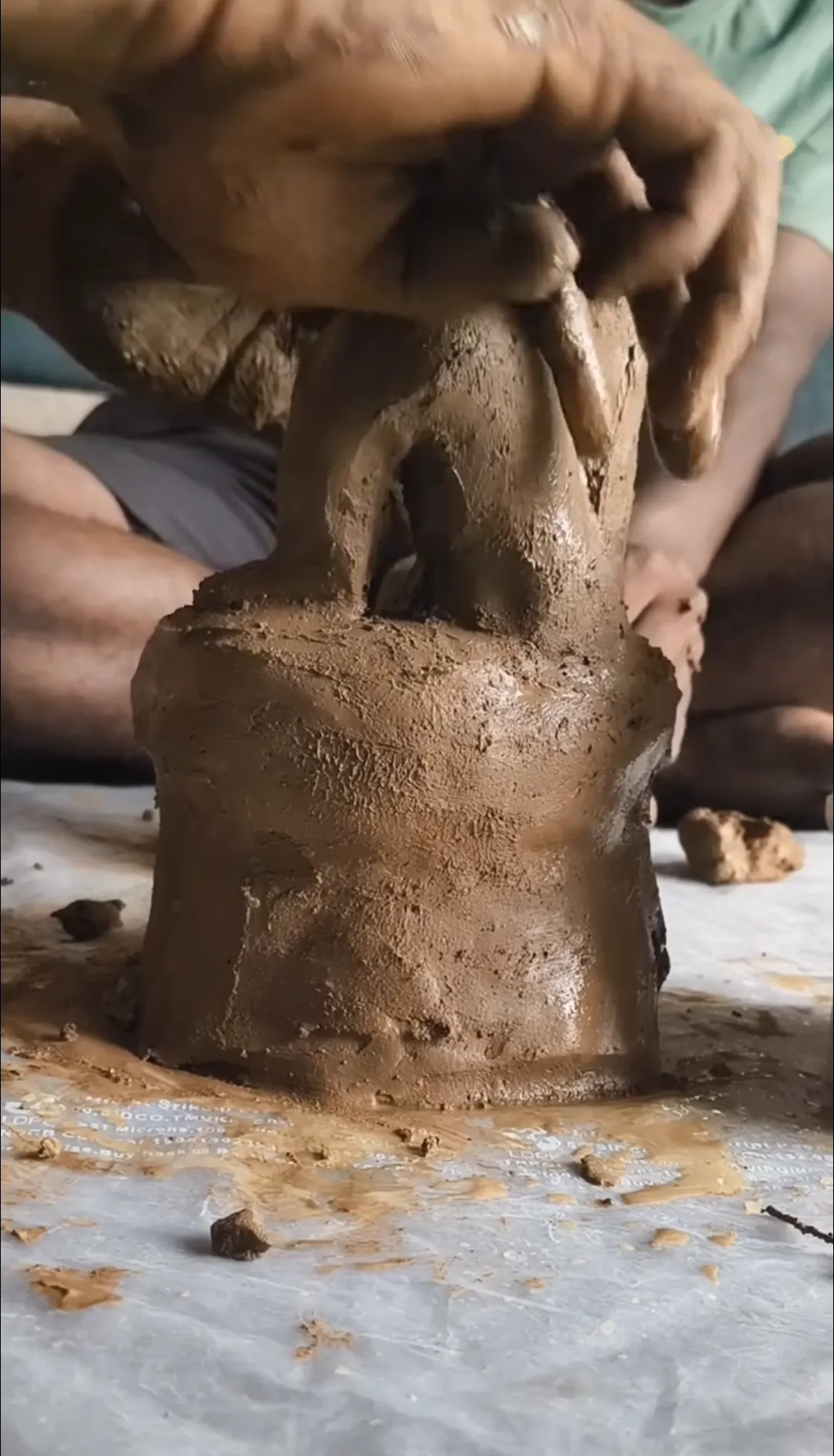
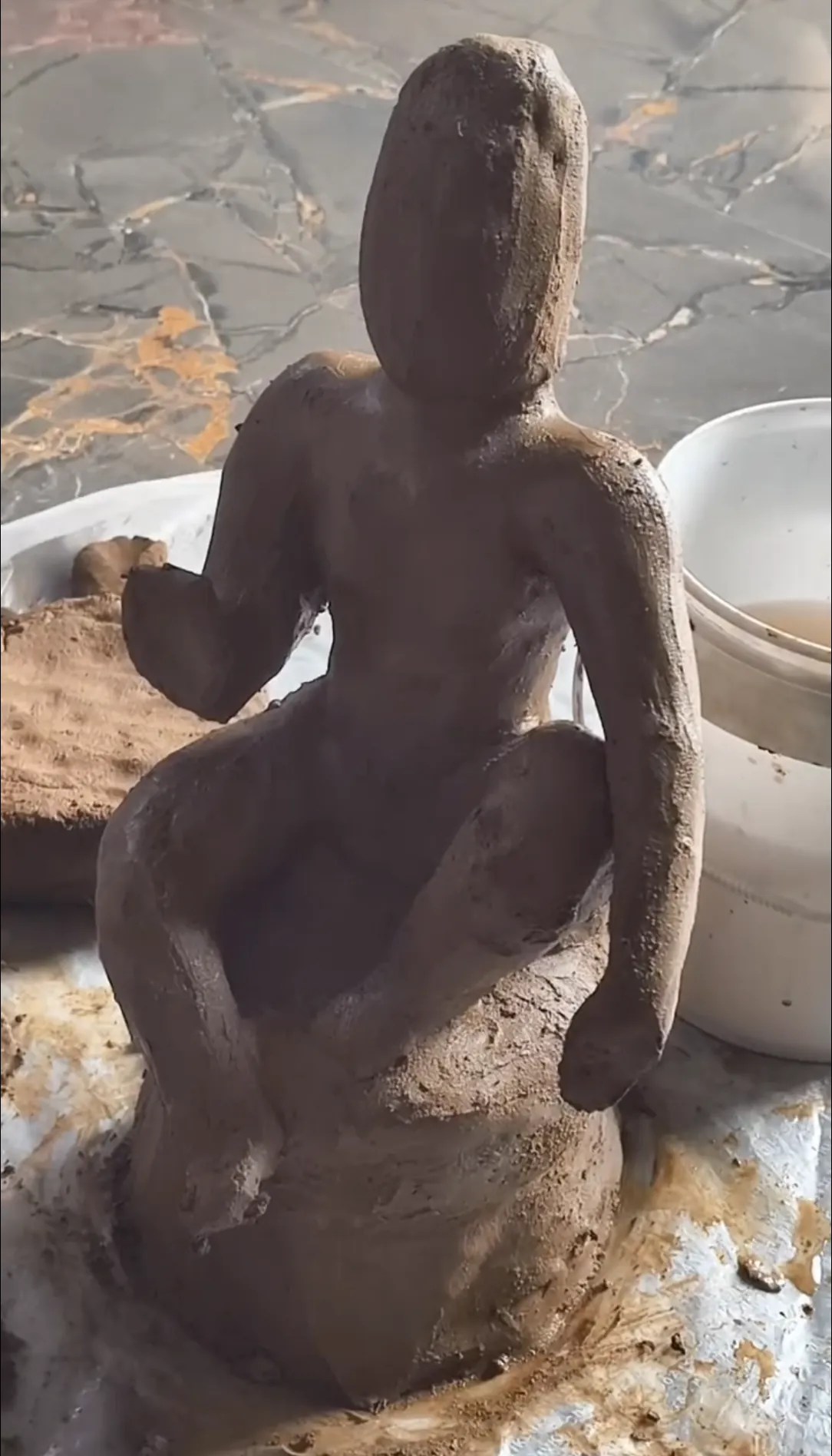
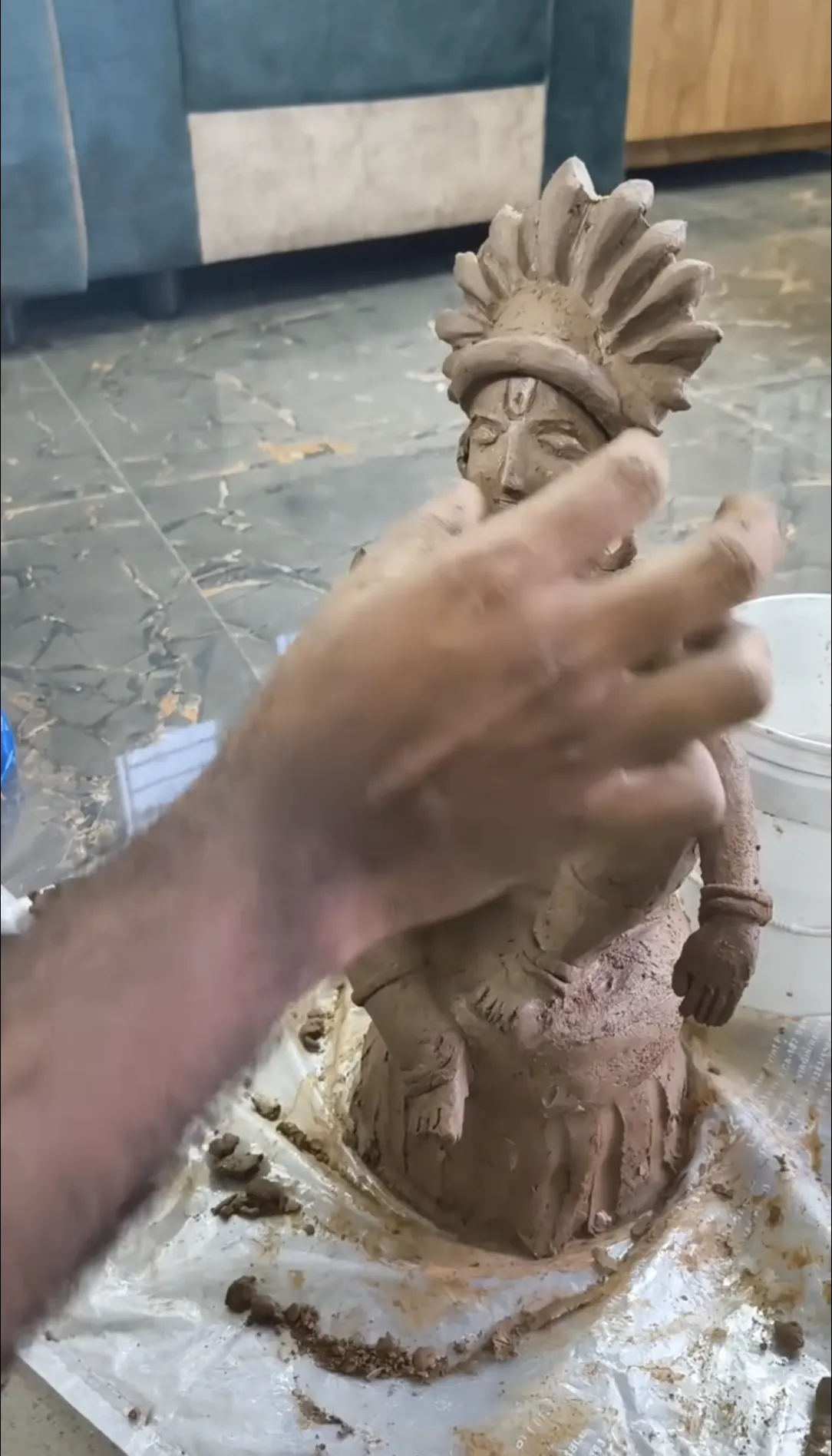
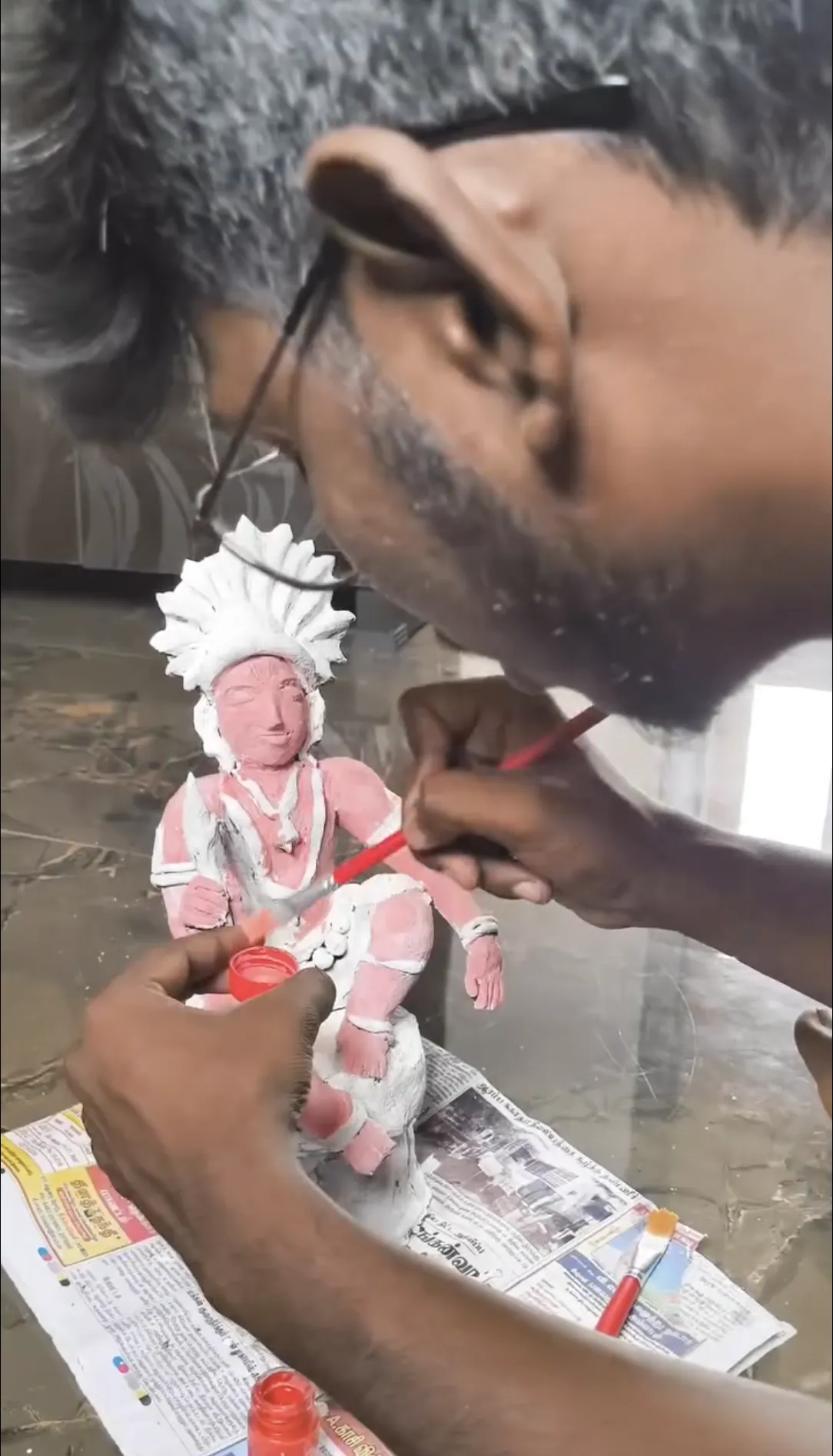
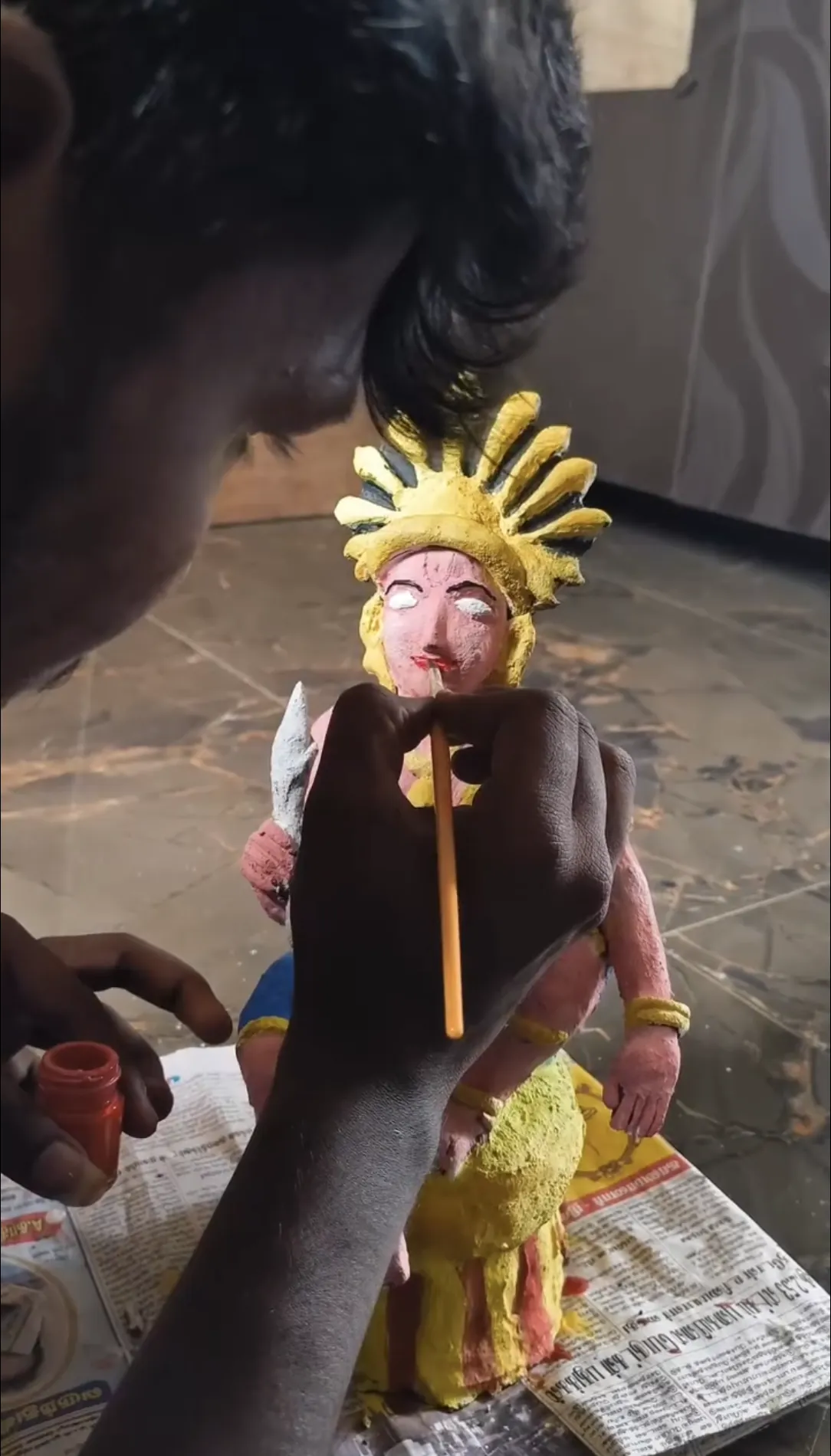
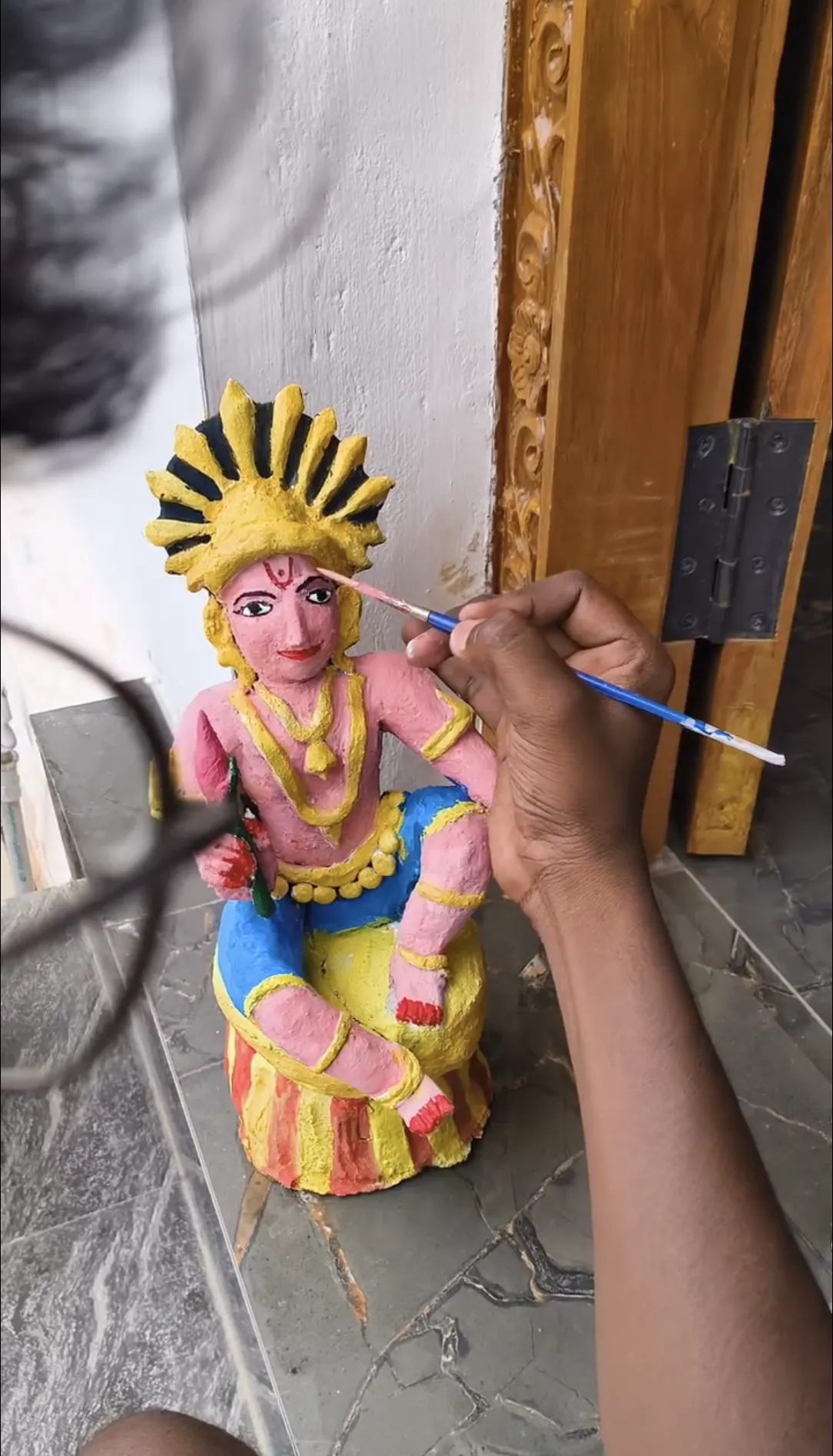
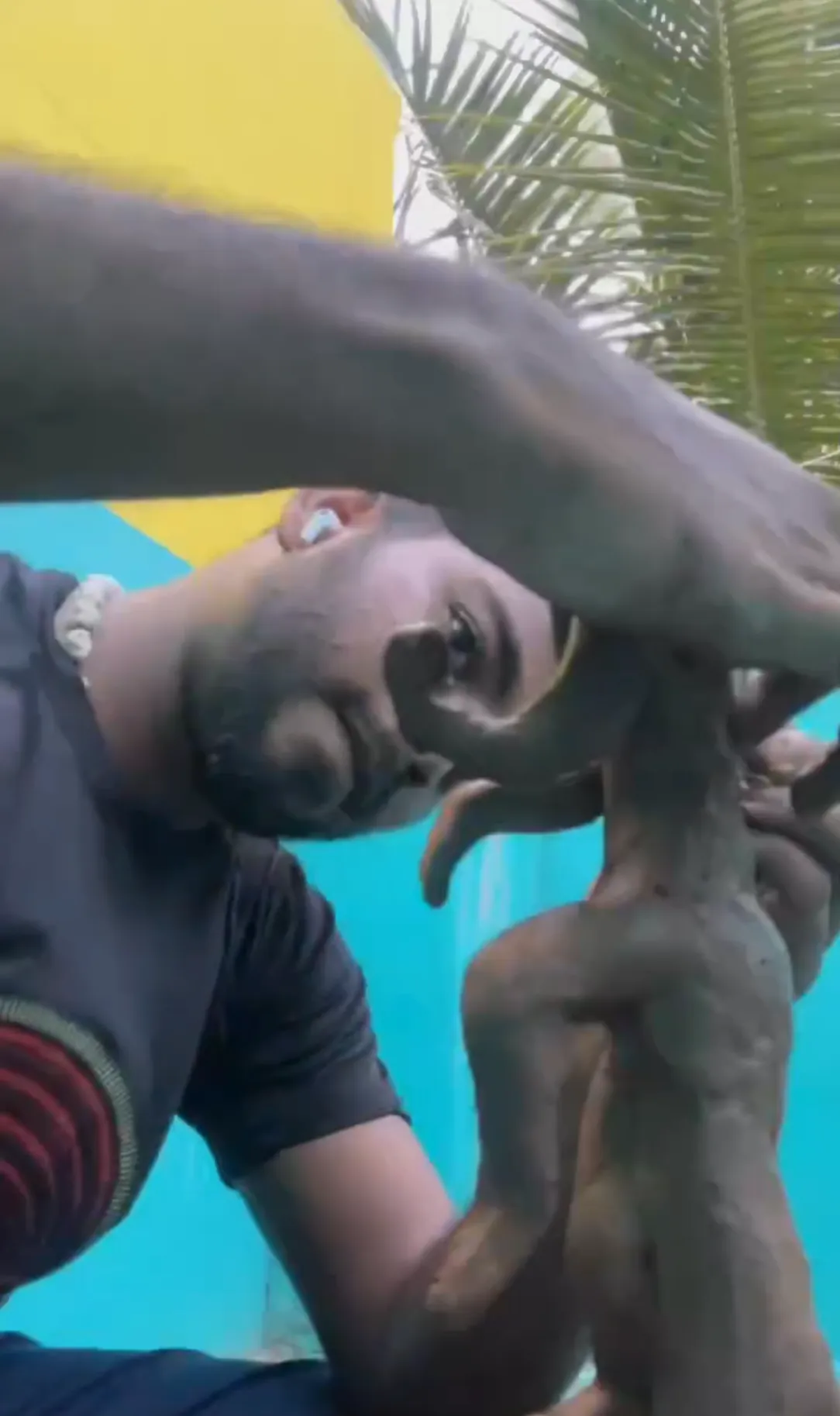
Sastha is a primal deity connected to the ancient Tamil way of life and the philosophy of Aaseevagam/Ajivika. In Tamil traditions, he is associated with Lord Indra, known in Tamil contexts as Ainthiran or linked to Mayan Aindhiram, and also shares connections with Lord Muruga. Depicted riding a horse or elephant and accompanied by his two consorts, Poornakala and Pushpakala, he is regarded as the chief among many malevolent rural deities such as Sudalai Madan, Thalavaai Madan, Palavesakkaaran, Pattavaraayan, Sangili Booththaar, and many others, traditionally counted as 21 such deities. These lineages and stories survive through Tamil Villu Paattu traditions preserved and written by certain Tamil communities. Though sparsely spread across Tamil Nadu, yet deeply rooted in the southern districts, he appears in Kerala as Dharma Sastha or Ayyappan. My grandmother also passed down to me the tradition of Padagalinga Sastha, whose temple is located in Malayankulam near Kallidaikurichi in Tirunelveli. There is even a Mount Shasta in California, whose name strangely echoes his presence in an unexpected way. This artwork of mine is dedicated to him. I collected the clay with my potter friend Mariyappan, who took me to Thatchanallur in Tirunelveli, where we sourced fine clay from an old man. At his house, we prepared the clay and shaped the sculpture, and after a week we painted it while resolving the cracks that had formed. The statue was later taken to his family temple, where there stands a figure of Thittu-Muttu Ayyappan, another form of Sastha. We ate jujubes and bathed in the Thamirabarani River. It was a wonderful day!
3. Sivan/Nataraajan
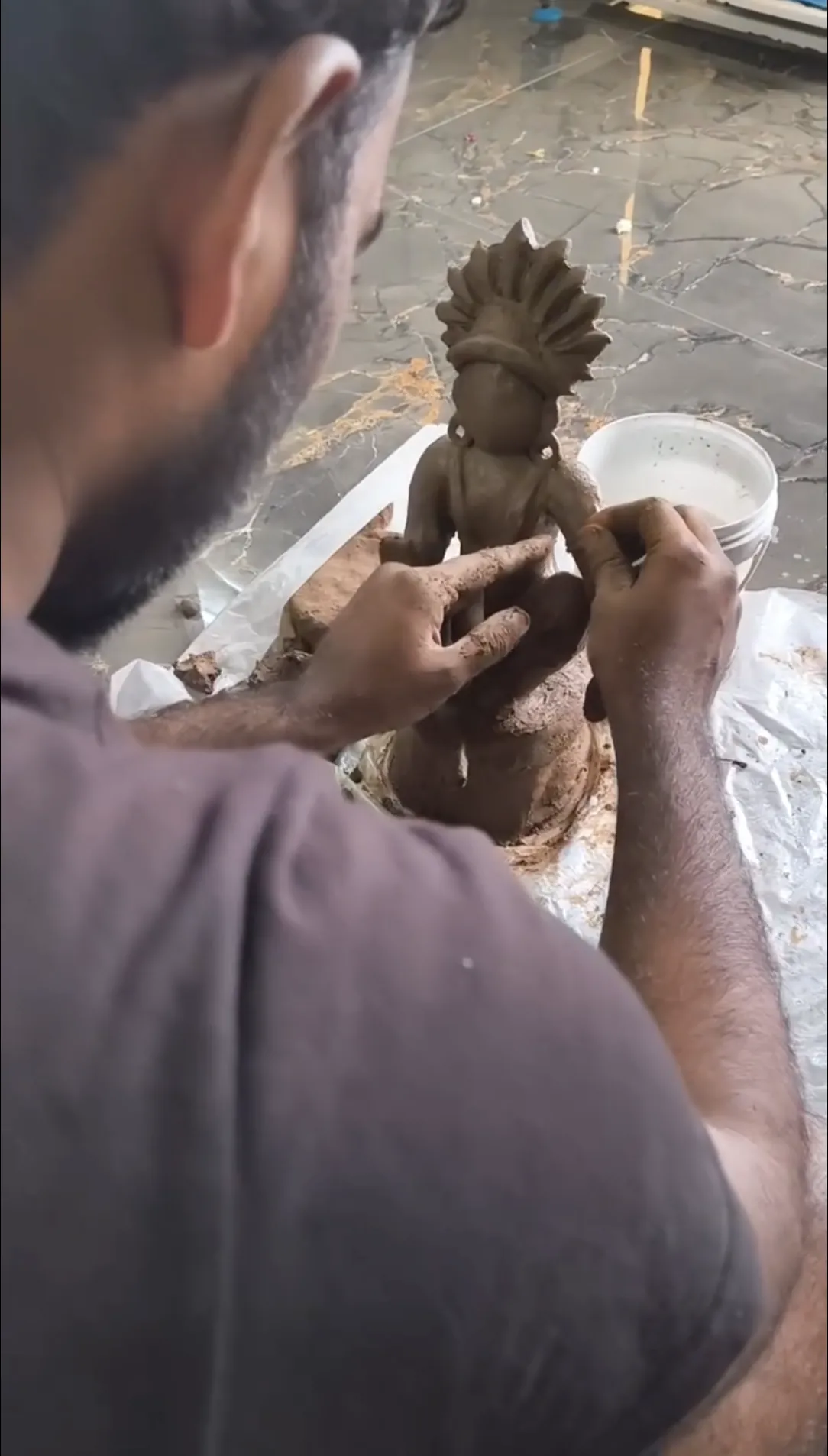
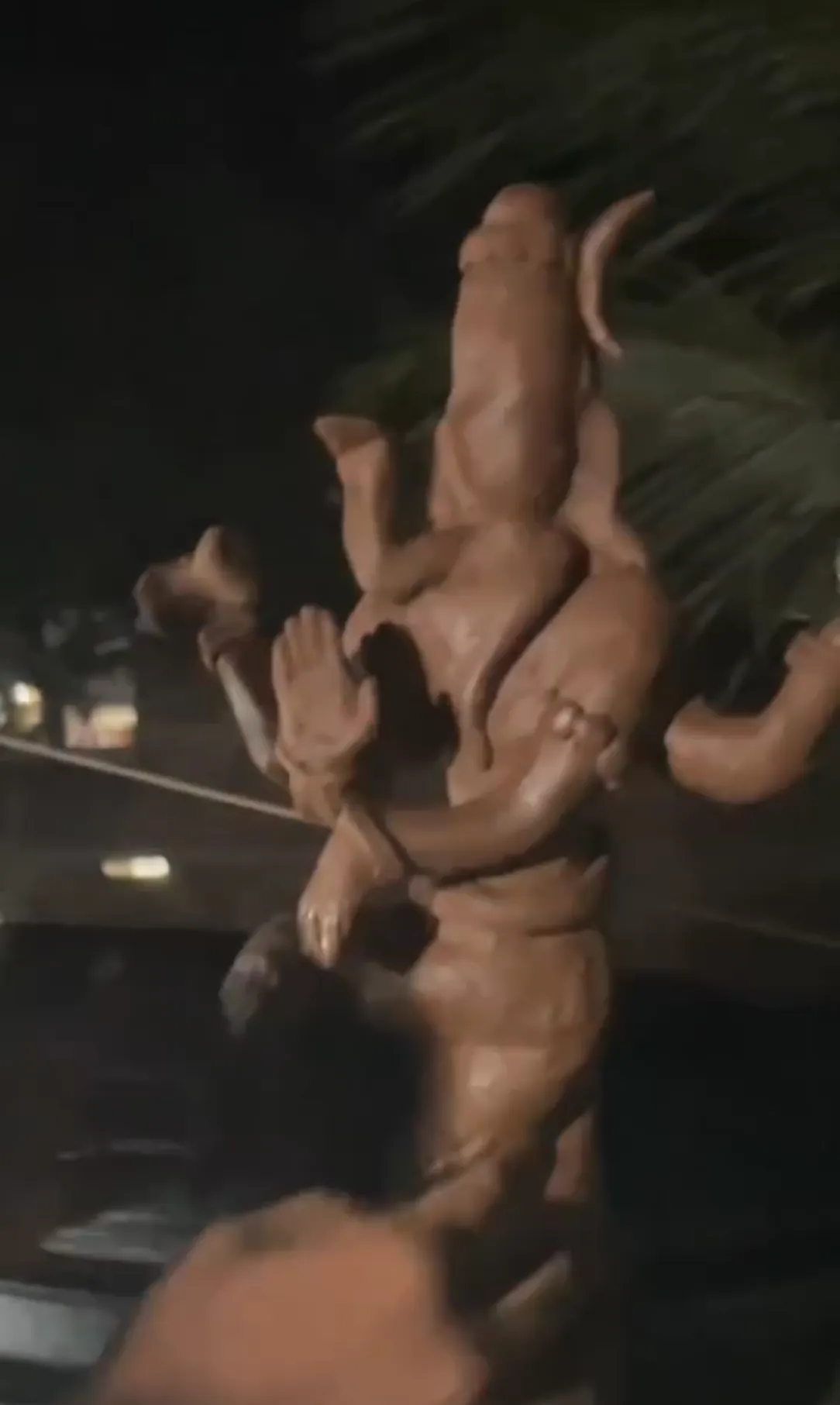
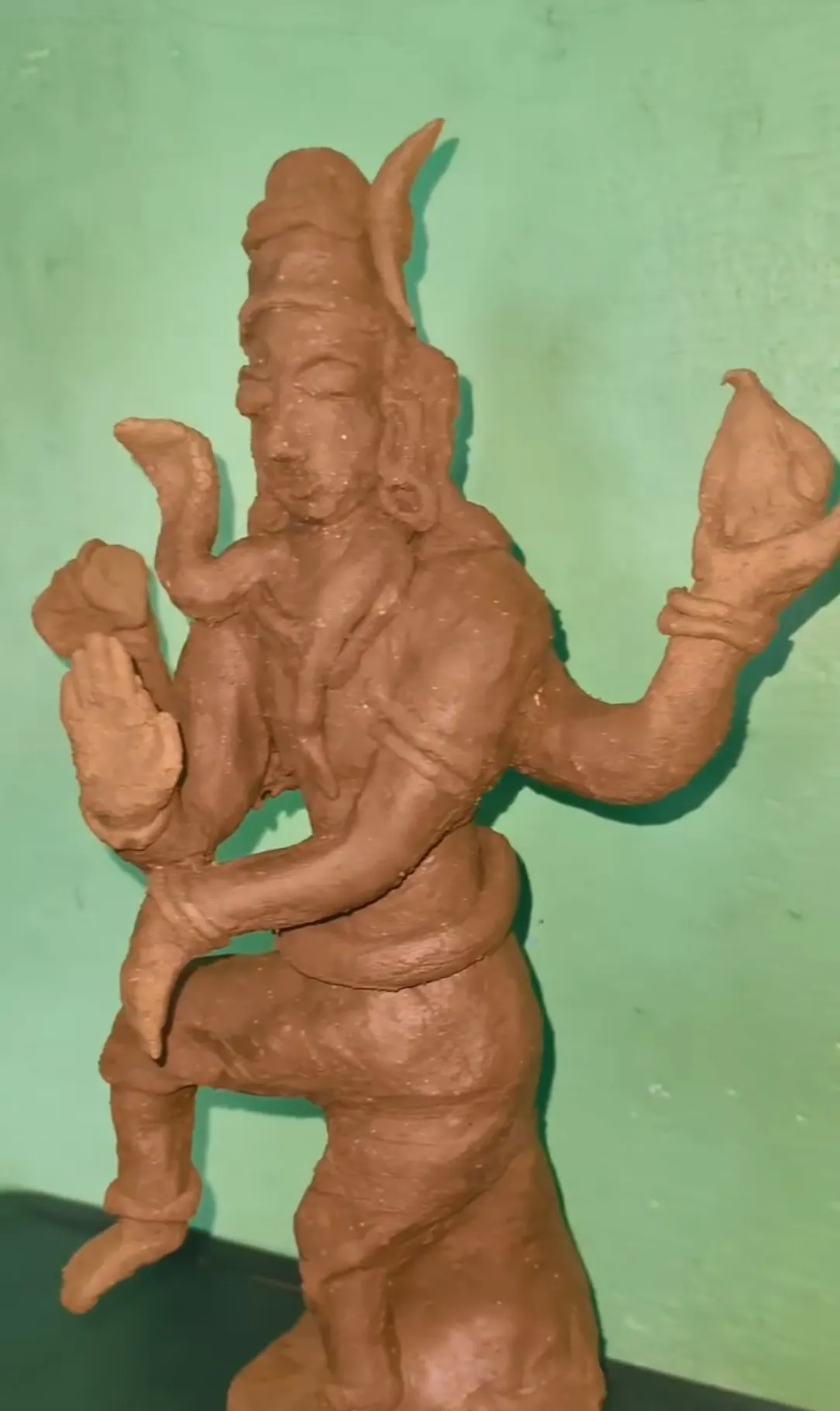
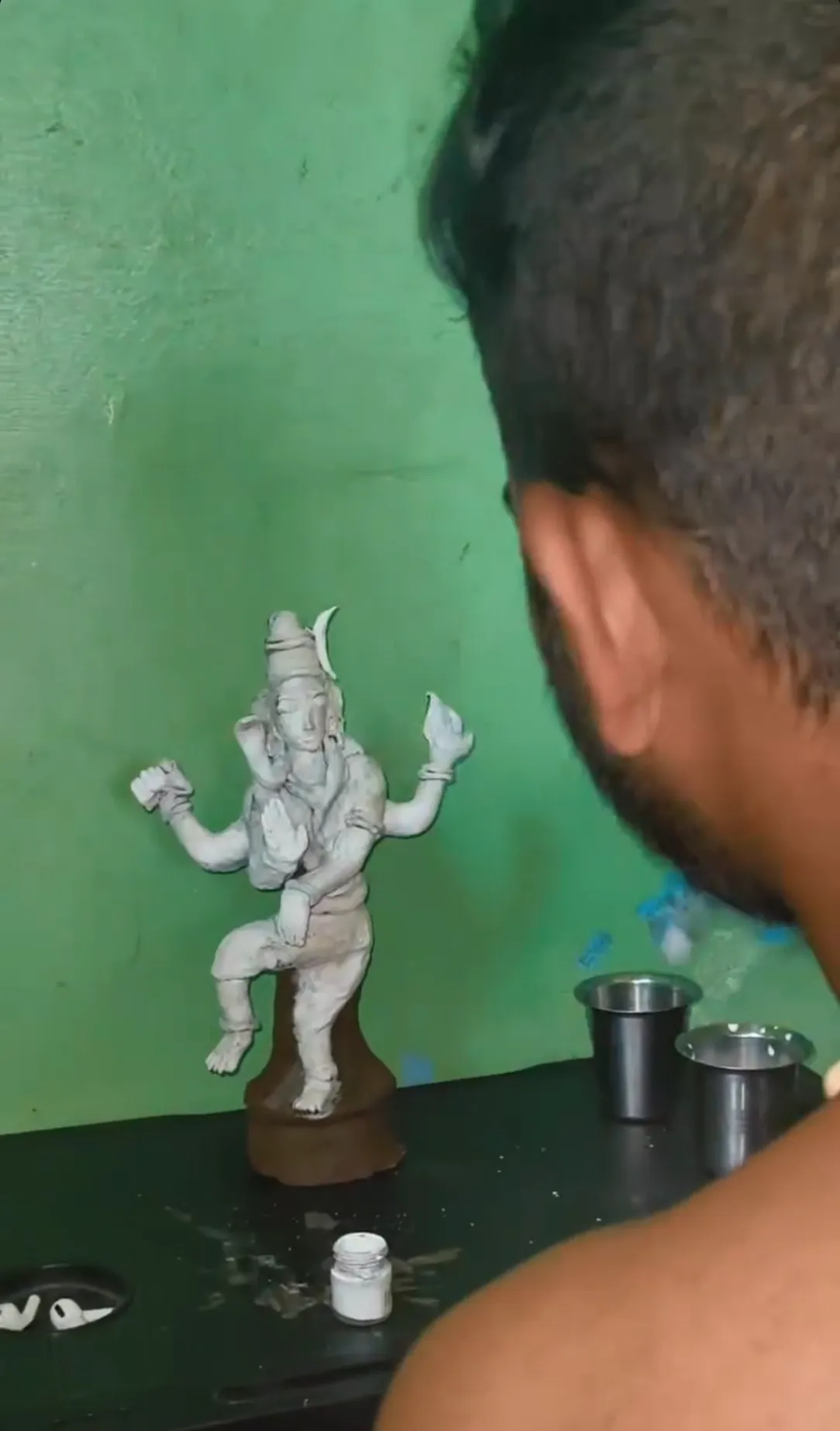
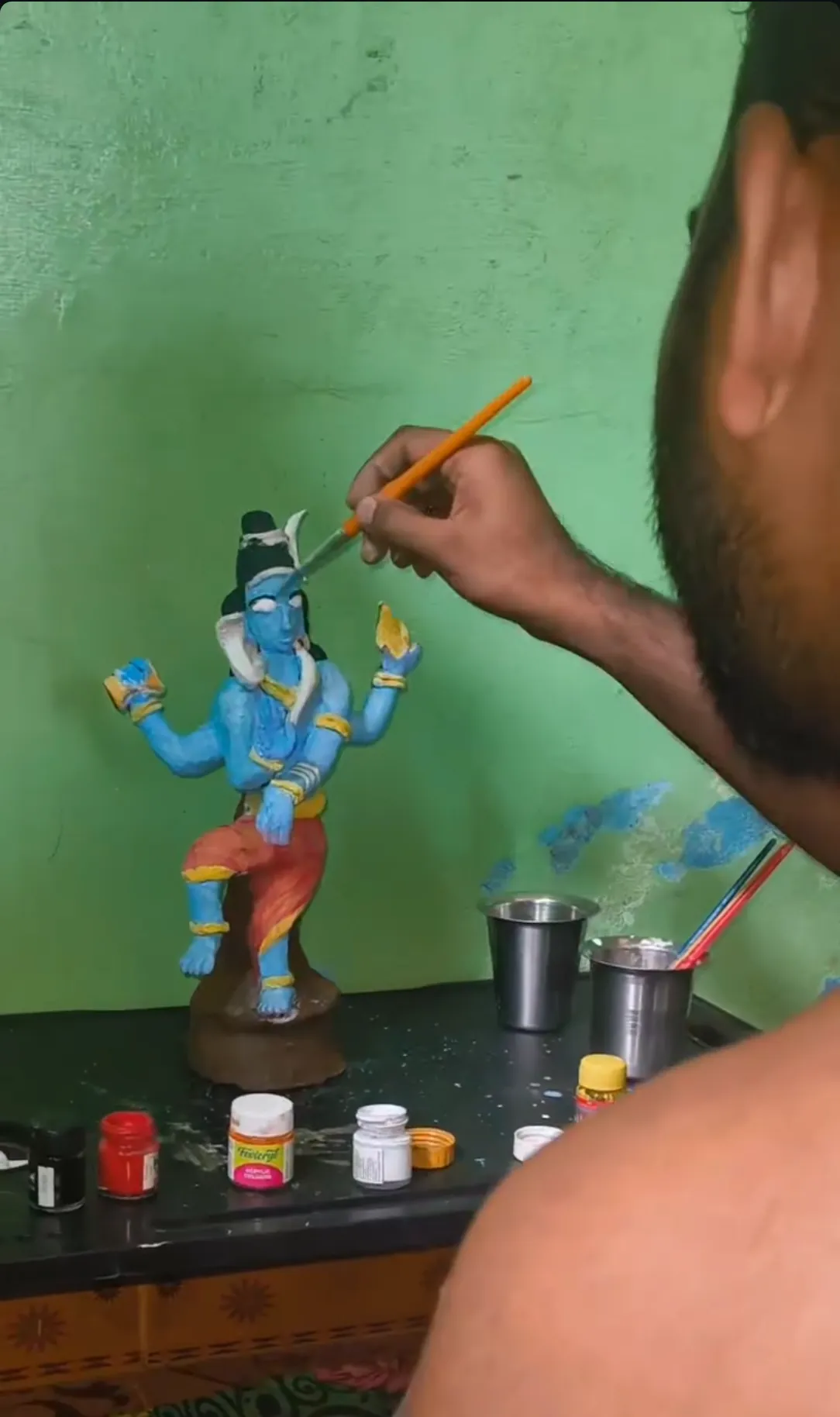
Sivan, more than a god, is deeply rooted in Tamil culture. Especially in Tamil traditions, the form of Natarajan remains profoundly significant. Many Tamil kings built Sivan temples across Tamil Nadu, carrying his worship through centuries of art, philosophy, and devotion. He is often understood not merely as a god, but as the first being of awakening, the one who transformed from man to divine consciousness, embodying the idea of man becoming god. The form of Natarajan is also deeply connected to ideas of cosmic rhythm and atomic science, which is why a statue of him stands before CERN in Europe. Azhagiya Koothar, housed at the Chepparai Natarajar Temple in Tirunelveli, is believed to be the world’s earliest Nataraja idol, crafted even before the famous golden idol of Chidambaram Thillai Natarajan. And this one is made by a Tirunelveli guy. Clay from Saamiyaar Kulam has been shaped into a mythological cosmic dancer and a historical dancer of the heart. Thiruchitrambalam!
Your words always bring a smile to my face and remind me of the wonderful time we spent together. It was one of the most beautiful days of my life. Love you, bro, always